
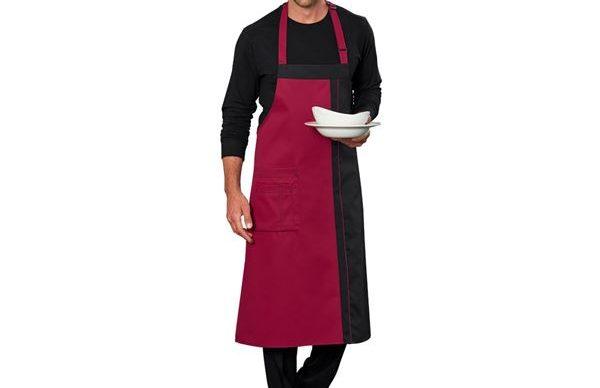
custom logo printed aprons & bibs
custom-logo printed aprons (kitchen, chef, barista, bib, waist, canvas / leather / polyester) covering wholesale prices, printing & decoration techniques, fabrics & construction, MOQs / lead times, production
Price ranges (finished, printed aprons — EXW / factory)
- Basic cotton/polyester bib or waist apron (thin 160–200 GSM, single-pocket) — printed, bulk: ≈ US $1.80 – $4.50 / pc (large runs, simple 1-colour print).
- Mid-weight cotton / canvas apron (220–350 GSM) with printing or embroidery: ≈ US $3.50 – $8.50 / pc.
- Heavy canvas or waxed cotton chef aprons (premium, leather straps, multiple pockets) with custom embroidery/patches: ≈ US $9 – $25 / pc depending on hardware and finish.
- Polyester sublimation full-print aprons (sport / promo): ≈ US $2.50 – $7.00 / pc for full-color print on polyester face.
- Turkey (Istanbul / ) typical ranges: expect ~10–25% higher than lowest-cost İstanbul-Turkey listings for similar spec, but with faster lead time and lower MOQ. So a mid-weight printed canvas apron might be $4.50–$10 EXW in Turkey.
(These are ranges — final quotes depend on fabric, print method, order qty, custom hardware, and packaging.)
Fabrics, weights & how they affect price
- Light cotton / poly (160–200 GSM): cheapest, good for promo aprons.
- Midweight cotton canvas (220–320 GSM): common for cafes & bars — balanced price/feel.
- Heavy canvas / duck cloth (350–550 GSM): premium / workwear — higher fabric cost, more labour for seams & pockets.
- Polyester (for sublimation / outdoor use): inexpensive, enables all-over dye sublimation prints.
- Leather / faux-leather accents or full leather aprons: premium, much higher cost and slower production.
- Coated / water-repellent finishes: add cost (DWR or PVC coating) and may affect print adhesion.
Printing & decoration methods — what works on which fabric, cost drivers
- Screen printing
- Best for: cotton/canvas and polyester when using compatible inks.
- Strengths: very low per-unit cost on large runs, durable.
- Cost drivers: number of colours (each colour = screen & setup fee), print area, order quantity.
- Use when: ≥200–300 pcs and logo has solid colours.
- DTG (Direct-to-Garment)
- Best for: 100% cotton aprons, small runs, photographic prints.
- Strengths: full-colour, no screens.
- Constraints: pretreatment for dark fabrics, slower, higher ink cost — good for <200–300 pcs or sample runs.
- Sublimation (Dye-Sublimation)
- Best for: polyester aprons (all-over prints, sports / promo aprons).
- Strengths: vibrant full-bleed prints, very durable on polyester.
- Not for: cotton (unless poly-coated).
- DTF (Direct-to-Film) / Heat Transfer
- Best for: multi-colour designs on mixed fabrics; lower setup than screen.
- Strengths: flexible for medium runs, good colour detail.
- Watch for: hand/feel and wash durability — choose quality film & proper curing.
- Embroidery
- Best for: small logos, brand names on chest/pocket straps, premium look.
- Cost drivers: stitch count, logo size, digitising one-time setup. Often more expensive per piece than printing but perceived as premium and durable.
- Patches / Woven Labels / Leather Badges
- Use for premium aprons to avoid printing on coated fabrics or to add texture. Costs per patch add up but give a high-end look.
- Special Inks & Finishes (discharge, puff, reflective)
- Add cost but deliver special effects (vintage look, raised prints, reflective for safety aprons).
Typical production workflow (factory)
- Spec & sample approval (fabric, GSM, straps hardware, print placement).
- Cutting — marker planning; heavy canvas may need special blades.
- Sewing / assembly — pockets, hem, rivets, leather reinforcements.
- Decoration — screen/DTG/DTF/embroidery applied (timing matters — sometimes print before assembly).
- Finishing — trimming threads, pressing, DWR coating if required.
- Quality control & wash test (recommended: 1–3 wash cycles to test print adhesion and shrinkage).
- Packing — folded in polybag or hung; hangtags or bulk boxes.
MOQs & lead times (rules of thumb)
- Ready-made blanks (wholesale suppliers): MOQ low (10–50).
- Custom cut & printed aprons: typical MOQ 100–300 pcs per design / color; many factories accept 50–100 for simpler specs — Turkey often around 100–200.
- Lead times: sample 5–14 days; production 2–6 weeks depending on complexity, printing method, and factory queue. Rush options cost extra.
How printing choice affects price & negotiation tips
- Screen printing — ask factory for per-colour setup fee and per-unit price at your exact qty and colour breaks (100/250/500). Consolidate colours and positions to reduce cost.
- DTG / DTF / Sublimation — ask about pretreatment, wash tests, and colour calibration. Be specific about light vs dark base fabric (dark needs underbase for DTG, increasing cost).
- Embroidery — ask for digitising fee, stitch count estimate, and sample stitch-out before full run.
- Sample policy — always pay for a pre-production sample and include washing test. Negotiate discounted sample when you commit to production.
QC checklist (what to inspect)
- Fabric GSM & colour fastness (do a wash & lightfastness test).
- Stitch per inch, seam strength, pocket alignment.
- Print registration, colour accuracy, print adhesion (wash test).
- Embroidery stitch density and thread quality.
- Hardware function (buckles, rivets, strap adjusters).
- Labeling, care instructions, and packaging.
- AQL standard: propose one (e.g. AQL 2.5 for critical defects).
Simple cost example (illustrative — estimates only)
- 300 pcs, cotton canvas apron 280 GSM, 1-colour screen print front chest (10 x 10 cm), single pocket, adjustable neck buckle → approx USD $4.50 – $7.50 / pc EXW (Turkey ~ add 10–20%).
- 150 pcs, polyester sublimation full-print apron → approx USD $3.00 – $5.50 / pc.
- 200 pcs, heavy canvas with leather straps & embroidered logo → approx USD $9 – $18 / pc.
RFQ template — copy & paste to factories (English)
Subject: RFQ — Custom Printed Aprons — [Your Brand]
Hello,
I need a quotation for custom aprons. Please quote EXW price and lead time for the following:
- Product type: (bib / waist / chef full apron / half apron) — e.g., Bib apron.
- Fabric: (e.g., 280 GSM cotton canvas, or 100% polyester for sublimation). Please state GSM and fabric composition.
- Size: (e.g., L 80 × W 65 cm for bib; or adjustable). Provide size set.
- Colour(s) of base fabric and pantone if critical.
- Print: location(s) (front chest, pocket), print size(s) in cm, artwork attached in AI/EPS/PDF vector. Preferred method: (screen / DTG / DTF / sublimation / embroidery). If you recommend a method, please state why and price difference.
- Hardware: adjustable neck buckle (plastic/metal), leather strap option (yes/no). Specify material & options.
- Finishes: DWR coating, rivets at pocket corners (yes/no).
- Quantity: please quote for 100 / 300 / 500 pcs (price breaks).
- Sample policy: sample cost & lead time; do you provide a wash-tested sample?
- Lead time for production after sample approval.
- MOQ, payment terms, incoterms (EXW / FOB / DDP), packaging (polybag / hangtag).
- Any certs (OEKO-TEX, REACH) or tests you can provide.
Thank you — please attach any product spec sheets and sample photos.
Regards,
[Your name / company / contact info]
more advanced / niche pricing & printing-finishing techniques for aprons—and what you might expect in Turkey / globally if you push to special finishes. Consider this part “premium / alternative methods” to help you differentiate or understand hidden cost areas.
Premium / Specialty Finishes & Their Cost Impact
| Specialty Finish | Description / How It’s Done | Incremental Cost Drivers | Use Case |
|---|---|---|---|
| Leather / PU Leather Trim or Pocket | Use leather or faux-leather straps, pocket sections, edging or trim panels on apron. Sometimes laser-etched or heat-embossed leather logo / branding. | Material cost (leather or PU panel), precision sewing / finishing, sometimes laser cutting or debossing, extra lining or backing. Cost per unit increases significantly depending on leather area. | Premium cafe-style aprons, gift / designer merchandise. |
| Washed Canvas / Enzyme Wash & Vintage Look | Fabric is washed / treated for fade / softness (enzyme, stone-wash, pigment wash) before or after printing/embroidery. | Extra finishing batch, shrinkage control, possibly higher reject/rework rate, need to test prints post-wash. Lead time increases; cost might go up ~5-15% over untreated canvas. | Boutique / lifestyle-brand aprons with vintage feel. |
| Waterproof / Coated Aprons | Use coated polyester, PU-laminated canvas or DWR finish. Printing on top may need specific ink or transfer method (e.g. PU-compatible inks). | Cost of coated fabric, specialised transfer or printing method that doesn’t crack / peel after flex; sometimes testing required. | Outdoor-use aprons (e.g. for baristas standing outside, café terraces), or brands marketing water-resistance. |
| Laser-Cut / Die-Cut Leather Patches | Add leather/bonded patches with logo (laser-cut or die-cut to shape), sewn or heat-bonded onto apron. | Patch manufacturing cost, additional sewing/labour step, alignment precision. | High-end gift aprons, boutique use. |
| Reflective or Fluorescent Printing / Safety Standards | Use reflective inks or strips; sometimes need to comply with safety visibility standards. | Reflective materials / inks cost more; setup & testing (certification, reflectivity measurement). | For aprons used by service staff near traffic, events with safety lighting, or corporate safety-type branding. |
| All-Over Print / Patterned Styles | Instead of just logo, have repeating pattern (e.g. branding motif), cut-to-match panels, colour-coordinated straps / piping. | More artwork prep, matching pattern at seams, possibly higher print waste, increased sample & size-set adjustment. | Brand-centric or fashion-oriented line of aprons (retail / boutique rather than bulk promo). |
| Mixed-Media Decoration | E.g. screen-print + embroidery combination (logo printed large + embroidered “sub-logo”), or printed pocket plus embroidered name patch. | Need both printing and embroidery processes; more set-ups & QC for registration alignment. | For chef / barista aprons where you want both branding visibility and premium finishing. |
| Custom Packaging / Gift Box / Presentation | Folded with custom box / sleeve or option to include brochure / card inside. | Packaging design & printing cost; add to per-unit cost. | Gift sales, hotel / restaurant client gifts, boutique retail packaging. |
| Digital Print / UV-Printed Acrylic / Add-on Hardware | Sometimes logos are UV-printed on attached acrylic or metal plate sewn onto apron. Though less common, it’s used for upland-premium designs. | Plate fabrication, UV printing & attachment, extra assembly labour. | High-end designer or corporate gift aprons. |
Niche Printing Techniques & Innovations
To go beyond the standard, here are a few innovative or less-common finishing options and how they may work (or be introduced to Turkish factories):
| Technique | What It Is / How It’s Newer | Considerations for Use |
|---|---|---|
| UV-Cured Inks on Thick Fabrics | Specialized plastisol or urethane inks cured via UV light; can make prints more durable and vibrant on heavy canvas / duck cloth. | Need to check if factory has UV-curing station; may require slower throughput; test for durability. Useful for heavy cotton / thick straps. |
| Laser Engraving / Etching | Instead of printing, some brands use laser to etch or engrave logo into leather or thick canvas (e.g. trim panel or pocket flap). | Need compatible material (leather / PU panel); higher design / tooling cost; typically used on small areas. |
| Digital Embellishment (3D Silicone, Puff Print) | Embossed / raised prints such as silicone / puff inks applied via screen print, or rubber-like molded print pieces bonded to apron surface. | Higher material cost for silicone / rubber compounds; curing and adhesion on fabric must be tested; slower print & QC time. |
| Anti-microbial / Anti-Stain Coated Fabrics with Printed Overlays | For food service / hospitality aprons, using fabrics pre-treated with antimicrobial finish; printed logo must be compatible and not compromise the treatment. | Fabric pre-treatment cost plus ensuring printing method does not interfere with anti-microbe coating; likely higher MOQ to source special fabric roll. |
| Interactive / NFC-Embedded tags | Less common, but for promotional / gift aprons you might embed an NFC chip tag or QR-coded woven label; printing of QR code on apron (e.g. pocket) via DTG or sublimation. | More complexity in supply chain; may increase unit cost by small margin; would require confirming factory can handle such label integration. |