
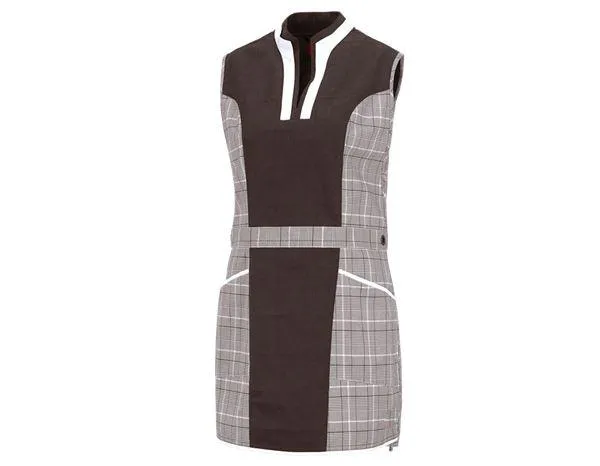
Tabard Apron Printed
custom-logo tabard aprons (Turkey & global): price ranges, materials, production & printing methods, artwork/quality specs, lead times, MOQ, and negotiation tips.
1) Quick price snapshot
- Turkey / global FOB (mass wholesale): ≈ $0.40–$2.50 / piece for plain or simple printed polyester/cotton blends at high quantities (MOQ commonly 300–1,000
- Turkey (local factories / workwear suppliers): ≈ €1.5–€8 / piece for factory production with custom logo printing depending on fabric, finishing, and order size (smaller runs cost more). Some workwear suppliers show prices in this band with MOQs from 10–100.
- Small-batch / retail (Etsy, custom shops): $8–$35+ per finished apron (lower volume, premium finishing, embroidery).
cheapest at high-volume FOB Turkey orders; mid-range for local Turkish factories (faster, easier communication, shipping); highest for small custom runs or embroidered/premium fabric items.
2) Typical MOQs & lead times
- Turkish factories / Tiger Textile: MOQs often 50–500; bulk pricing improves rapidly after 300–1,000 pcs. Production 2–6 weeks after sample/PO.
- Turkey manufacturers / workwear firms: MOQs can be 10–100 depending on supplier and if you accept standard sizes/colours; lead time 1–4 weeks (shorter if stock fabric available). / Tiger Textile:
- Local print shops / small suppliers: MOQ 5–50; production 3–15 business days depending on printing technique.
Sample orders usually cost extra (sample price + shipping) — expect $10–$50 sample fee.
3) Common materials & specs to choose
- Polycotton (65/35 or 50/50) — durable, good for screen printing and DTF/DTG; typical weight 180–240 gsm.
- 100% cotton canvas — sturdier, better hand-feel, takes screen print & embroidery well.
- Polyester (for sublimation) — required if you want full-bleed sublimation prints.
- Non-woven / disposable promo aprons — cheapest (promotional giveaways) but lower durability.
(Choose fabric based on use: heavy duty workwear → canvas/polycotton; promo/event → lightweight polyester or non-woven.)
4) Printing & decoration methods
- Screen printing — best for large runs with 1–6 spot colours (very durable). High setup cost per colour (screens), but low per-piece price at scale. Good for logos with solid colours
- DTF (Direct-to-Film) / Heat transfer — flexible for medium runs and multi-colour designs; lower setup than screen; good for polyester & cotton blends.
- DTG (Direct-to-Garment) — excellent for small runs and photo-like prints on cotton; prints best on lighter colours and cotton fabrics. Per-piece cost higher than screen for large runs.
- Sublimation — full-bleed, permanent print but only on polyester fabrics. Great for all-over colorful designs.
- Embroidery — premium look; best for small logos/text; higher per-piece cost and minimum setup (digitizing fee). Good for workwear branding where durability & prestige matter.
5) Typical cost components to expect
- Blank apron cost (material + cut/sew) — depends on fabric & origin (see section 1).
- Printing / decoration cost — includes setup (screen/embroidery digitizing) + per-piece print fee. Example: screen setup per colour may be $20–$100 (varies) then $0.30–$1.50/colour per piece at scale; DTG/DTF per piece $1–$6 depending on complexity and fabric. (Exacts vary by supplier & region.)
- Artwork & prepress — vector conversion, colour separation, proofs (often small one-time fee).
- Packaging & shipping — folded + polybag per piece, cartons; shipping FOB or DDP adds to cost.
6) Artwork & tech specs to give suppliers (copy/paste checklist)
- Files: Vector PDF / AI / EPS for logos (outlined fonts). If raster, use 300 dpi at final print size (TIFF/PNG).
- Colour: Provide Pantone numbers for spot-colour matching OR CMYK values; state whether you accept slight shade variance.
- Print area: give exact mm (e.g., chest 200×120 mm) or full-bleed specs for sublimation.
- Placement: front chest / full front / pocket area — specify exact location.
- Fabric: specify composition (eg. 65/35 polycotton 200 gsm) — affects print method.
- Quantity, sizes, packing (1pc/pp bag? cartons of 50?), delivery term (FOB Istanbul / DDP).
7) Practical negotiation & sourcing tips
- Ask suppliers for FOB and DDP quotes so you can compare landed cost to Turkey.
- Request 3 quotes: local local factory (Turkey),Turkish textile factory (Tiger textile istanbul), and one EU supplier (if you need quick lead time).
- Always get a pre-production sample (paid) and a digital proof before mass production.
- For multi-colour logos: check whether spot inks (screen) or DTF/DTG is cheaper for your target qty. Screen is cheapest at high volumes; DTG/DTF better for low-to-mid volumes.
8) Where to start
- Prepare your logo in vector (AI/EPS/PDF) and decide fabric preference (polycotton vs canvas vs polyester).
- Decide target qty bands to compare pricing: 10–49, 50–199, 200–999, 1,000+.
- Send the spec pack (artwork + fabric + print area + sizes + pack/label request) to:
- 2–3 Turkish workwear suppliers (e.g., Cation Workwear and other exporters) for lead-time & local quotes.
- 2 Turkish suppliers on / Made-in Turkey for FOB mass-production pricing.
- Ask each for: sample cost, per-piece price at your qty bands, print method recommended, artwork requirements, production & shipping lead time, payment terms.
9) Sources I used (for quick reference)
- Factories / Turkiye wholesale product listings (apron & tabard price ranges).
- Made-in-Turkey / wholesale apron listings (low-cost FOB references).
- Print method guides (screen, DTG, sublimation, DTF) and comparative articles.
- Turkish suppliers & B2B exporter listings (local factories, workwear suppliers).
————————————————————————————————————————————–
for all printing techniques used on tabard aprons / workwear aprons, including styles, durability, advantages, limitations, price effects,
more informations about possible printing techniques from Turkey-istanbul
1) SCREEN PRINTING (Serigrafi Baskı)
Best for:
Large orders, solid-colour logos, durable prints (restaurants, cafés, industrial use).
How it works:
A mesh screen is made for each colour. Ink is pushed through the mesh onto the fabric.
Styles Possible:
- Spot-colour printing (1–6 colours)
- Bold solid logos
- Large chest/back prints
- High-opacity white on dark fabric
- Most durable print (3–5 years depending on wash).
- Cheapest for high quantities.
- Vibrant colours, sharp edges.
- Not suitable for photographs or gradients (unless halftones).
- Each colour requires a screen → setup cost.
Factory Cost Style:
- 1-colour logo: low cost
- 2–3 colours: medium
- 4–6 colours: expensive setup
When to choose:
If your apron orders are over 100 pcs and your logo has 1–3 solid colours.
2) DTF PRINTING (Direct-to-Film Transfer)
Best for:
Multi-colour logos, small or medium orders (10–500 pcs).
How it works:
The logo is printed on a special film with CMYK + white ink. Then heat pressed onto fabric.
Styles Possible:
- Full colour (photos, gradients, shadows)
- Fine details
- Metallic-looking colours (simulated, not real metallic)
- Small labels, chest logos, back prints
- Works on cotton, polycotton, polyester.
- Ideal for small-batch custom orders.
- Very fast production.
- No colour-count limitations.
- Not as breathable as screen print.
- Can feel slightly “rubbery” when large print area.
Typical lifespan:
50–80 washes depending on heat press quality and film type.
When to choose:
If you have colorful logos and volume under 300 pcs.
3) DTG PRINTING (Direct-to-Garment)
Best for:
Cotton aprons, photo prints, short runs (5–200 pcs).
How it works:
A digital printer sprays ink directly into cotton fabric fibers.
Styles Possible:
- Photo-realistic printing
- Smooth colour gradients
- Soft-touch print (no thick layer)
- Vintage/faded styles (optional)
- Softest print feel.
- Perfect for multi-color artwork.
- No setup costs → ideal for samples.
- Works best on 100% cotton (not ideal on polyester).
- Colour vibrancy lower on dark fabrics unless pretreated.
Durability:
40–60 washes (high-quality DTG machines).
When to choose:
If you want soft feeling prints and photo-quality, especially for cotton aprons.
4) SUBLIMATION PRINTING
Best for:
100% polyester aprons, all-over prints.
How it works:
Ink turns into gas under heat and permanently penetrates polyester fibers.
Styles Possible:
- Full-bleed designs (entire apron printed)
- Edge-to-edge colours
- Vibrant photo prints
- Patterns, gradients, full surface designs
- Print never cracks or peels.
- Very bright, accurate colours.
- Lightweight and breathable.
- Requires polyester (min. 65%, best 100%).
- Cannot print white ink (white areas = fabric colour).
When to choose:
If your aprons are polyester tabards or you need full-coverage designs.
5) EMBROIDERY
Best for:
Premium-quality workwear, hotels, restaurants, long-term use.
Styles Possible:
- Raised 3D logo (thick stitching)
- Flat embroidery
- Text logos
- Shield-style emblems
- Longest lifespan (5+ years).
- Luxury appearance.
- Resistant to industrial washing.
- Higher cost per logo.
- Not suitable for photo-like prints.
- Small thin details not possible.
When to choose:
If you want premium branding with durability and high prestige look.
6) VINYL / FLOCK TRANSFER (Flex / Flock)
Best for:
Names, numbers, small text, single-color designs.
How it works:
A colored vinyl sheet is cut and heat pressed onto the apron.
Styles Possible:
- Matte, glossy, metallic, glitter
- Velvet-like flock texture
- Single-colour bold logos
- Clean edges
- Works on all fabrics
- Great for personalization (names, initials)
- Not breathable
- Not suitable for large colour images
- Can crack after heavy washing
When to choose:
For individual names, simple logos, sports or staff numbering.
7) PUFF / 3D SCREEN PRINTING
Best for:
Streetwear-style tabards, branding that stands out in 3D.
How it works:
Special puff additive mixed with screen ink expands under heat.
Styles Possible:
- 3D raised logo
- Soft rubber-feel print
- Bold graphic elements
- High visual impact
- Great for branding / merch-style aprons
- Not for detailed designs
- Not as durable as flat screen printing
8) REFLECTIVE PRINTING (Geri Yansıtıcı Baskı)
Best for:
Safety workwear tabards, night-shift staff, industrial workers.
Types:
- Reflective heat transfer
- Reflective screen ink (more limited)
- High visibility
- Washable, long-lasting
- Usually one colour: silver/grey
- More expensive than normal transfer
9) FOIL / METALLIC PRINTING
Best for:
Luxury brand aprons, events, cosmetic shops, premium hospitality.
Styles:
- Gold foil
- Silver foil
- Holographic foil
- Rose gold foil
- Premium glossy look
- Perfect for luxury branding
- Requires heat transfer + adhesive
- Not ideal for heavy washing
- Higher cost
10) RUBBERIZED / SILICONE INK (Kauçuk Baskı)
Best for:
Heavy duty workwear, thick and durable logos.
- Ultra durable
- Thick, premium feel
- Suitable for industrial washing
- Higher cost than standard screen printing
- Only for spot colours
Summary Table
| Order Qty | Logo Type | Best Method | Why |
|---|---|---|---|
| 10–200 pcs | Multi-colour / photo | DTF or DTG | Low setup, full colour |
| 100–5,000 pcs | 1–3 colour logo | Screen printing | Cheapest, most durable |
| 10–200 pcs | Premium look | Embroidery | Luxury finish |
| Polyester aprons | Full surface print | Sublimation | No cracking, full-bleed |
| Safety aprons | Reflective logo | Reflective transfer | High visibility |
| Names/Numbers | Single colour | Vinyl transfer | Fast & clean |