
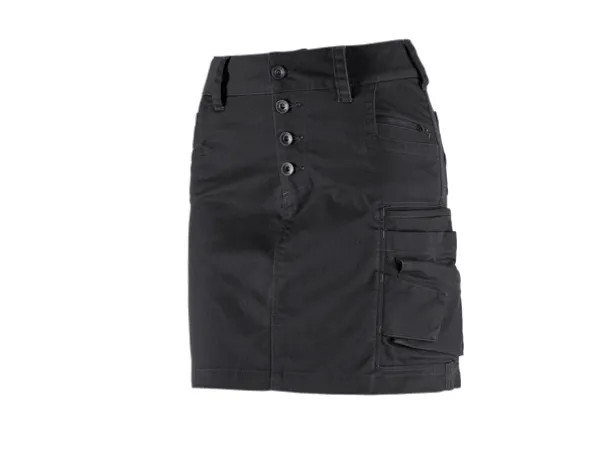
workwear skirts custom logo printed
custom-logo printed workwear skirts (i.e., skirts used as part of a uniform or workwear set):), fabric options, printing/decoration techniques, MOQs & lead-times,
Example Skirts (Retail / Work-Uniform Crossover)
- Tiger Textile Skort — performance skort, stretch fabric, similar to utility or outdoor skirt.
- Tiger Textile Skort — work / sporty crossover, with skirt + short inside.
- Tiger Textile Women Performance Skort — synthetic performance, useful for workwear in active jobs.
2) Factory / Wholesale Price Ranges
Based on work-uniform suppliers, skirt manufacturers, and sourcing-service data:
| Region / Source | Estimated Factory Price for Work / Uniform Skirt |
|---|---|
| Turkey / OEM Skirt Factories | For custom uniform skirts: “Mid-length school uniform” skirts with poly-cotton: in a Turkish factory, fabric options like T/C, CVC, 100% cotton, polyester are offered, and logos can be done via silk screen, heat transfer, embroidery, woven badge. tigertextile.com.tr For pleated skirts: a Chinese factory lists a “2022 Hot Sale Pleated Skirt” for US$11.39 (MOQ 50-999). tigertextile.com.tr Other skirt manufacturers: on Made-in-Turkey, there are custom knit pencil skirts (100% cotton) in range US$15.90–19.90 (MOQ = 1 piece for example seller). tigertextile.com.tr |
| Turkey / Local Workwear | For “iş eteği (work skirt)”: Tiger Textile lists a work skirt made of %63 Polyester, %33 Viskon, 4% Likra, 180 g/m² for 999 TL (this is retail price, not factory quotation). tigertextile.com.tr For producers in Turkey: Workwear manufacturers like Tiger Textile have production capacity and are “producer” (manufacturer) per their catalog; they could potentially do custom skirts, but you’ll need to ask for a quote. tigertextile.com.tr |
Take-home: For custom workwear skirts, you can reasonably expect factory FOB / EXW quotes from istanbul around US$8–15+ per skirt depending on fabric and logo. In Turkey, a bespoke work skirt from a workwear factory may be more expensive on a per-unit basis, especially for small runs, but comparable for higher MOQ / production runs.
3) Fabric Options for Work Skirts
When specifying a workwear skirt, the fabric choice is critical for durability, comfort, and logo-application. Below are common fabric options + pros and trade-offs:
- Poly-Cotton Twill / Blend (e.g., 65 % Poly / 35 % Cotton)
- Very common in uniform skirts. Durable, wrinkle resistant, and relatively cheap.
- Good for screen printing and heat-transfer logos.
- 100% Cotton Twill / Poplin
- Natural look, breathable, good for embroidery or DTG.
- More prone to wrinkle, may shrink if not pre-shrunk.
- Polyester (100%)
- Very durable, often used in hospitality / light industrial uniforms.
- Excellent for dye-sublimation if skirt fabric allows, or for transfers.
- Less breathable than cotton.
- Stretch Blends (Cotton + Elastane / Poly + Elastane)
- Offers more comfort and flexibility (important if skirt is fitted).
- For embroidery or heavy prints, stabilizer may be needed.
- Wool / Wool Blends
- More premium look, used in formal uniforms.
- Price is higher; print options more limited; embroidery is often preferred.
4) Printing / Decoration Techniques (for Work Skirts)
- Screen Printing
- Good for simple or bold logos (one or few colours).
- Pros: very durable, cost efficient in large runs.
- Cons: setup cost per colour; ink layer may feel stiff on some fabrics.
- Best for: poly-cotton skirts, polyester uniforms.
- Embroidery
- Best for logos on waistband, pocket tab, or skirt hem label.
- Pros: very professional and durable; works on most fabrics.
- Cons: cost goes up with size and stitch count; on very thin skirts might need backing.
- Heat Transfer (Vinyl / DTF)
- DTF (Direct-to-Film) is very common now. Works on many fabric types.
- Pros: full-colour designs, gradients, photographic logos.
- Cons: transfer “hand” (feel) can be slightly distinct; proper heat press needed.
- According to Print Union, DTF is a good pick for complex or multi-colour logos tigertextile.com.tr
- Digital Textile Printing / Sublimation
- If the skirt fabric is compatible (e.g., polyester), you can do full-panel designs with digital textile printing.
- Pros: can produce very detailed prints, seamless all-over designs.
- Cons: requires fabric pre-treatment; not all fabrics take dye the same way. Digital textile printing broadly includes many modes (reactive, pigment, disperse) depending on fabric. tigertextile.com.tr
- Patch / Woven Label
- Rather than printing directly on the skirt panel, you could sew on a woven label or patch with a logo.
- Pros: very durable, premium finish, easy to replace.
- Cons: adds sewing time, cost of label + stitching.
5) Key Cost Drivers & Production Considerations
- Fabric quality and weight: heavier, more premium or blended fabrics cost more.
- Logo placement & size: bigger logos or more locations = higher print cost.
- Design complexity: multicolour or gradient logos are costlier (particularly for screen printing).
- Order quantity (MOQ): higher volume often gives better per-unit discounts.
- Production lead time: custom runs (especially with logo) take longer.
- Trim and finishing: things like waistband elastic, lining, zippers, labels, hem finishing.
- Quality control: ensuring logos are aligned, colours are right, and fabric is good quality all matter.
6) MOQ & Lead Times (Typical for Work Skirt / Uniform)
- MOQ: Many skirt factories (in istanbul) have MOQs around 100-200 pcs for custom color + design. (For example, Hangzhou Garment’s MOQ is 100 pieces. tigertextile.com.tr
- Lead Time: Sample time ~ 5–10 working days for prototype; mass production ~ 20–30 days or more depending on order size, fabric sourcing, and finishing. (Based on common OEM skirt factories.) tigertextile.com.tr
7) RFQ Checklist — What to Ask Skirt Manufacturers
Here’s a checklist you can use when you ask factories or uniform makers for quotes:
- Product: work / uniform skirt — provide a sketch or reference image (length, style: pencil, A-line, pleated, etc.)
- Fabric: specify composition, weave, GSM (or ask for fabric swatches)
- Sizes: size range + how many per size (S, M, L, etc.)
- Colour(s): provide Pantone or fabric color code
- Logo(s): position(s), size (in cm), design file (vector .ai/.eps), preferred decoration method (embroidery, screen, DTF, patch)
- Trim: waistband type (elastic / rigid), zipper, lining, label, hem details
- Finish: pre-shrunk, heat set, chemical finish, brushing, etc.
- MOQ: ask for sample price, plus price tiers (e.g., 100pcs, 200pcs, 500pcs…)
- Lead time: sample lead time, bulk production lead time
- Packaging: how skirts will be packed (poly, hanger, folding)
- Quality control: request sample photos, ask about inspection, tolerance (stitching, colour)
- Payment terms: EXW / FOB, deposit amount, balance terms
8) Recommended Fabric + Print Combinations for Work Skirts
- Poly-cotton uniform skirt → screen printing for logo + woven label
- 100% cotton skirt → embroidery for logo or DTF (if design is multi-color)
- Polyester skirt → sublimation (if you want full-panel design) or heat-transfer
- Pleated or decorative skirt → embroidered patch or small logos, not large screen prints on pleats
Fabric Options for Work / Uniform Skirts
| Fabric Option | Description | Pros for Work Skirts | Trade-offs / Challenges |
|---|---|---|---|
| Poly-Viscose / Poly-Viskon | A blend used in uniforms, often for skirts / pants | Very durable, wrinkle-resistant, good drape, easier maintenance | Less breathable than cotton; need to check shrinkage & print compatibility tigertextile.com.tr |
| Poly-Cotton Gabardine | Twill weave blend commonly used for workwear | Structured look, good for tailored skirts, holds shape | Slightly stiffer; heavier; cost depends on blend % (Özgür Mensucat lists poly-cotton workwear fabrics) tigertextile.com.tr |
| 100% Cotton Gabardine | Natural cotton with a tight weave | Breathable, good surface for embroidery or prints | Higher cost; wrinkles more; may shrink if not pre-shrunk; Turkish source for gabardine exists via uniform fabric supplier tigertextile.com.tr |
| Stretch Polyester / Stretch Blends | Polyester plus elastane / spandex | Comfort + flexibility (good fit), less restrictive | Print challenges: stretch affects embroidery and transfer; need stretch-safe inks / stabilizers |
| Heavy Cotton (Canvas / Drill) | Very durable, thick weave | Extremely durable, long-lasting uniform skirts, resistant to abrasion | May be too heavy / rigid; print adhesion and hand feel may require special handling |
| Lightweight Polyester | Thin, smooth, synthetic | Ideal for sublimation or transfer printing, lightweight uniform skirts | Not as breathable; need to check colorfastness; more prone to static |
Local Turkish Fabric Examples:
- Tiger textile sells workwear fabrics including 100% cotton, poly-cotton, PVC blends, etc. tigertextile.com.tr
- Tiger textile (istanbul) produces workwear fabrics like poly-cotton gabardine and cotton gabardine. tigertextile.com.tr
Printing / Decoration Technique Details (Advanced)
Here, I dive into more subtle aspects of printing / decoration on skirts, especially for uniform skirts or workwear skirts.
- High-Resolution DTF / Hybrid DTF
- Use: for logos, complex graphics on uniform skirts, or custom panels.
- Technical nuance: you can use high-stretch DTF films to accommodate fabric stretch; different adhesives for synthetic blends vs cotton.
- Quality tip: test adhesion + wash resistance (20+ washes if uniforms will be laundered often).
- Heat-Seal Reflective / Safety Transfer
- Use: for safety uniforms, reflective job roles, security staff, hospitality.
- Detail: reflective transfers must be applied with correct temperature/time; incorrect press can reduce reflectivity.
- Trade-off: reflective material thickness / feel vs durability.
- Metallic / Specialty Ink Screen Printing
- Use: for logo branding (e.g., metallic gold/silver logo on a skirt) or emboss-like finish.
- Consideration: metallic inks may crack if skirt is tight / body-hugging; use lower cure temp or flexible inks.
- Sublimation Printing (on Synthetic Panels)
- Use: if a skirt has polyester panels (or fully polyester), you can do full-pattern sublimation with seamless designs.
- Nuance: pattern placement matters especially on pleated skirts — fabric panels must be pre-printed aligned to pleat lines.
- Cost factor: digital textile printing / sublimation has higher per-meter ink cost but allows very creative designs.
- Laser / Engraving on Labels
- Use: premium leather or PU patches for brand logos; you can laser-engrave a small brand patch to stitch onto the skirt.
- Pros: very clean, premium finish, no “ink hand”.
- Cons: adds cost and a component (patch) to sew on.
- Bonded / Appliqué Logos
- Use: create a shape from a different fabric / material and sew or glue it on the skirt (e.g., contrast fabric applique).
- Pros: very durable, design flexibility, multi-layer / raised effect.
- Cons: more labor, more expensive, needs good pattern alignment.
Additional Cost Drivers to Watch (Beyond the Basics)
- Fabric sourcing: if you choose a rarer fabric (poly-viscose gabardine, stretch gabardine), cost per meter goes up.
- Seam complexity: pleats, lining, darts, zippers — all these increase labor.
- Print location: logos on waistband or side panel need different handling / may require smaller presses or special jigs.
- Wash durability: uniforms often require repeated laundering — this means decorator must use durable inks/transfers or embroidery.
- Labeling + branding: woven labels, leather patches, size tags — these are additional cost.
- Packaging: uniform skirts often require special folding, hangtags, or packaging — ask what packaging cost is per piece.
Practical Skirt Examples (to Use as Spec Reference)
Here are some real skirts / skorts you can reference for style, fabric “feel”, and design:
- Cotton Pencil Skirt — Navy cotton pencil skirt; good baseline for structured work skirt.
- Slam Tech Women’s Skort — Sporty skort, synthetic + stretch, good for functional uniform use.
- Helly Hansen Women’s Skort — Performance / utility-style skort, reflects active uniform design.
- Kappa Elegance Skort — Simple design, good fabric stretch reference.
- Pocket-detailed A-Line Skirt Khaki — More utility / pocket-friendly skirt that could be adapted for work-wear.
Summary / Key Take-Aways for Negotiation
- Use fabric variety as leverage: ask factories for quotes on 3-4 fabric types (e.g. poly-viscose, cotton gabardine, stretch blend) — this helps you pick cost vs durability.
- Ask decorators for per-method printing quotes (DTF, screen, reflective) so you can compare cost-effectiveness.
- Request wash test sample (especially for uniforms) to ensure transfer / print / embroidery durability.
- For safety / visibility roles, consider reflective heat-seal transfers or reflective patches.
- If design is complex or “fashion / uniform hybrid”, consider digital textile printing for pre-cut panels.